
The "Social Skills" Myth That Harms Autistic People

On this page
Need behaviour support?
We provide NDIS positive behaviour support across Melbourne, Geelong and Port Lincoln. You can book a free consultation to talk it through.
Written by Julian Vilsten, Clinical Neuropsychologist and Specialist Behaviour Support Practitioner. Last updated: June 2026
For decades, a dominant idea shaped how we understood autism and communication: autistic people struggle to understand others. They lack empathy. They need to learn “social skills.”
But what if that story is only half true?
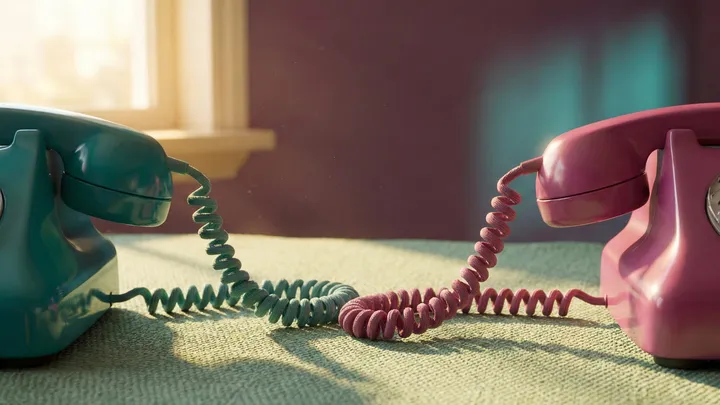
In 2012, autistic researcher Dr Damian Milton proposed a different way of thinking about these communication difficulties. He called it the “double empathy problem.” His argument was simple but important: when communication breaks down between autistic and non-autistic people, it is not a one-way deficit. It is a mutual misunderstanding. Both sides struggle to read the other.
Where the Burden Falls
The old model placed all responsibility on autistic people. They were taught to make eye contact, to read facial expressions, to stop “stimming,” to fit in. When interactions failed, the autistic person was seen as the problem.
Dr Milton saw it differently. Non-autistic people often misread autistic emotions, intentions, and communication just as much as the reverse. Experimental research has since backed this up. A 2020 study by Dr Catherine Crompton and colleagues found that information transfer between autistic people was just as effective as between non-autistic people. The breakdown only occurred in mixed groups. Rapport ratings showed the same pattern.
Autistic people communicate effectively with each other. They build rapport. They form meaningful connections. The “social skills deficit” often disappears when people are interacting with others who share similar ways of experiencing the world.
What This Looks Like Day to Day
Consider what happens when someone from a direct communication culture (like Australia) interacts with someone from a culture that values indirect communication (like Japan). Neither style is wrong. They are simply different. And when misunderstandings occur, we recognise it as a mismatch, not a deficit in one person.
The same principle applies here. When an autistic person and a non-autistic person interact, both bring different styles, preferences, and ways of processing information. Neither is wrong. They are simply different.
This has real implications for support.
How Support Can Change
If communication challenges sit between people, rather than inside one person, then support strategies need to change. Here are practical approaches grounded in this understanding:
1. Adapt the environment, not just the person.
Instead of asking an autistic individual to suppress their natural communication style, consider how environments can become more accommodating. Reducing sensory overload, allowing processing time, and accepting different forms of communication all help.
2. Education goes both ways.
Support workers, family members, and educators benefit from learning about autistic communication styles. Direct communication is not rudeness. Different eye contact patterns do not mean disengagement. Needing time to process is not a failure to understand.
3. Listen to autistic voices.
The people best placed to explain autistic experience are autistic people themselves. Involving autistic individuals in decisions about their own support is not just respectful. It leads to better outcomes.
4. Focus on connection, not compliance.
The goal should be meaningful interaction, not forcing someone to perform neurotypical social behaviours. When support prioritises genuine understanding over surface-level conformity, relationships thrive.
Deficit vs Difference
To be clear: some autistic people do face genuine challenges with social communication that require targeted support. Skills like reading safety cues, understanding workplace hierarchies, or navigating complex social situations may genuinely need assistance. The double empathy problem does not erase this reality.
But here is the crucial distinction: much of what gets labelled as a “social skills deficit” is actually a difference in communication style. Preferring direct language over hints is not a deficit. Processing conversations at a different pace is not a deficit. Showing engagement through listening rather than eye contact is not a deficit. These are differences.
The problem arises when we treat all communication differences as deficits requiring correction. This places the entire burden of adaptation on one group while the other continues unchanged. It teaches autistic people that their natural way of connecting is wrong, rather than simply different.
Real inclusion means recognising that meeting in the middle requires movement from both directions. It means distinguishing between skills that genuinely need building and differences that deserve acceptance. It means valuing diverse ways of being, rather than demanding conformity to one standard.
When support teams, families, and practitioners embrace this understanding, something shifts. The autistic person stops being the “problem to fix” and becomes a partner in building shared understanding.
HOW OUTCOMES LAB CAN HELP
We provide NDIS positive behaviour support across Melbourne, Geelong and Port Lincoln
Our practitioners write plans with the people who will use them, train the team in person, and stay to help put the plan into practice. We're a registered NDIS provider, and you don't need a referral.

WRITTEN BY
Julian Vilsten
Clinical Neuropsychologist and Specialist Behaviour Support Practitioner · AHPRA registered
Founder and Clinical Director of Outcomes Lab. More than 15 years in mental health, close to a decade of it in the NDIS, working with people who have complex support needs.